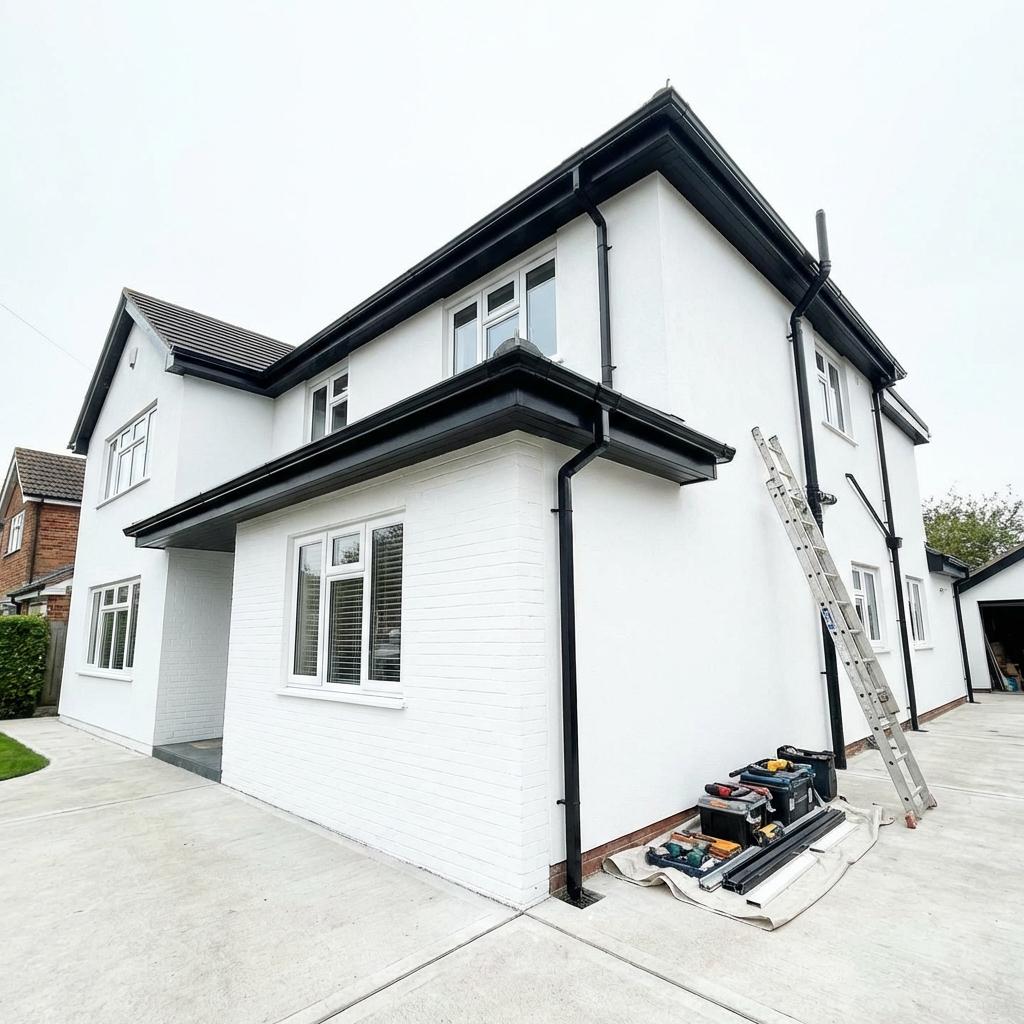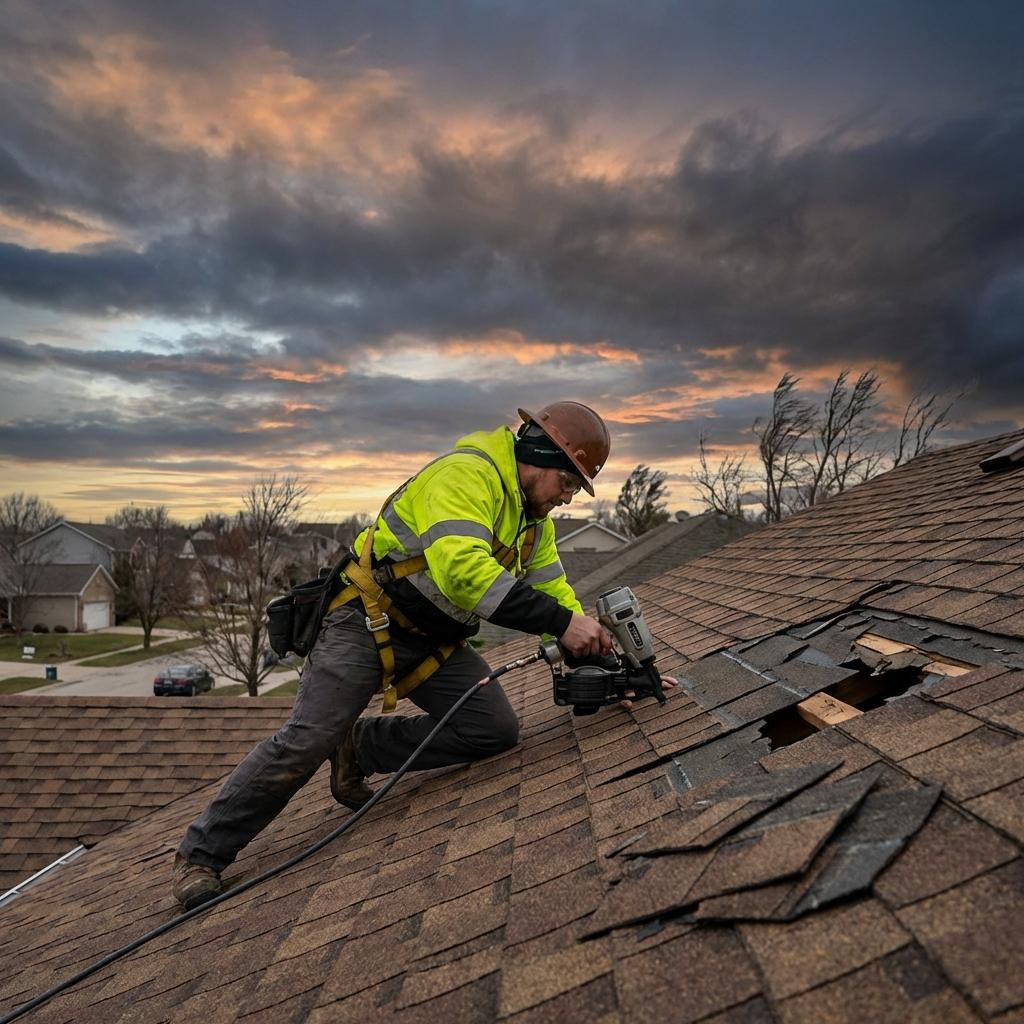
Every Galway homeowner facing a re-roof ends up weighing the same three materials: natural slate, concrete tile and metal. The right call depends on the age of the house, the roof structure, the distance from the sea and how long you plan to stay. Atlantic weather hits Galway harder than most of the country, and it changes the long-term maths. Here is how the three compare on cost, lifespan and day to day behaviour in 2026.
What Each Roof Type Costs to Fit in 2026
Concrete interlocking tile is the budget benchmark and the most common roof on Galway estate homes. On a typical three-bed semi-detached, a full re-roof in concrete tile lands between EUR 9,000 and EUR 15,000, roughly EUR 110 to EUR 160 per square metre fitted, including new underlay, battens, ridge and valley details. Our guide to roof replacement costs in Galway breaks that figure down line by line.
Natural slate is the premium option. Expect to pay 40 to 60 per cent more than concrete tile, so the same semi-detached comes in between EUR 13,000 and EUR 20,000. The slate itself varies widely in price: Spanish slate is the common choice across Ireland, while Welsh slate costs more again.
Metal sits between the two. Steel and aluminium roofing, whether corrugated sheet or standing seam, usually costs less than natural slate per square metre, while zinc standing seam is a specialist install that can rival slate once the extra labour is counted. For a like-for-like price on your own roof, our roof replacement service quotes all three materials.
Lifespan and Cost Per Year
This is where the materials really separate. A well-fitted natural slate roof lasts 80 to 120 years, which is why period buildings across Galway city still carry their original slate. Concrete interlocking tiles last 40 to 60 years, which is why 1970s and 1980s estate roofs across Knocknacarra, Renmore and Doughiska are now being replaced.
Steel and aluminium sit around 40 to 70 years depending on the coating system, while zinc lasts 60 to 80 years and develops a patina that seals over minor scratches. Copper passes 100 years but is rarely used on whole domestic roofs in Ireland now.
Work out the cost per year and slate often wins for the owner staying long term: roughly double the lifespan for 40 to 60 per cent more upfront. If you expect to sell within ten years, the cheaper tile keeps more money in your pocket. Our guide to the best roofing materials for Galway homes compares the options in more depth.
Need this fixed now?
Free quotes. Fast callouts across Galway City and County.
How Galway Weather and Salt Air Change the Maths
Galway is wetter and windier than most of Ireland, and big stretches of the county sit within reach of salt spray. That hits metal hardest. On exposed roofs in Salthill and Renmore and out towards Clifden, cheap galvanised fixings and cut steel edges can rust within a decade. Zinc and aluminium behave far better, and stainless steel fixings are essential on any coastal metal roof.
Wind favours heavier coverings. Slipped and lifted concrete tiles are a common sight after an Atlantic storm, while well-fixed slate and metal sheets hold far better. Wind-driven rain is the other threat: it finds every slipped tile and damaged verge, so the quality of the underlay underneath matters as much as the covering on top.
Moss is mainly the tile's problem. North-facing concrete tile roofs in damp Galway grow moss quickly, and moss holds moisture against the tile through winter freeze-thaw cycles, which is what cracks edges and corners. Dense natural slate stays relatively clean, and metal sheds moss and lichen entirely.
Which Roof Suits Which Galway Home
Period and older terraced houses in the city, including conservation areas around the Claddagh, should stay with natural slate. Planning permission may require it, and the roof structure was built for slate's weight. Our slate roofing service covers repairs and full re-slating on these homes.
Concrete tile is the natural match for estate semis and detached houses built from the 1970s onwards. Their timber trusses were designed for light concrete tile, and replacing like for like is the simplest and cheapest route. Natural slate is roughly two and a half times heavier, so swapping tile for slate can mean strengthening the roof structure first, and that is where many upgrade budgets quietly double.
Zinc standing seam suits extensions and contemporary builds, where its clean lines and hidden fixings earn the premium. Steel or aluminium, correctly fixed with marine-grade fittings, is the workhorse for agricultural buildings, coastal cottages and low-pitch roofs. Whatever the covering, use a roofer who works in that material daily, because the fixings and detailing differ completely between slate, tile and metal. Our tile roofing repair service and slate repair guide cover the two most common coverings in the county.
Need this fixed now?
Free quotes. Fast callouts across Galway City and County.
How to Compare Quotes Fairly
Roofers quote per square metre, but the scope behind the number varies widely. One quote can include new battens, a reinforced breather membrane, wind-rated tile clips and new lead valleys, while a cheaper quote leaves them out, and the difference shows up in the first winter storm.
Ask each contractor to name the underlay, the supplier and grade of slate or tile, the fixing specification and who removes the old roof. On a metal roof, the coating type and the gauge of the sheet matter just as much. For the full list of checks and questions, see our guide to choosing a roofer in Galway.
There is no single best roof, only the best roof for your house, your budget and your stretch of the Atlantic coast. Call 089 944 0642 for straight advice on slate, tile or metal for your Galway home, and a free written quote covering the full job. We work across Galway city and county, from Salthill to Clifden.