If your Galway home has a slate or tile roof, the sections that keep water out are not just the visible tiles. The lead flashing around your chimney, the valley gutters between roof slopes, and the soakers at roof-to-wall junctions are the most vulnerable parts of any roofing system. When leadwork fails, water enters your home directly, often damaging internal walls, ceilings, and roof timbers before you spot the first stain. This guide explains everything Galway homeowners need to know about roof leadwork, valley repairs, and what to expect when calling in a professional roofer.
What is Roof Leadwork?
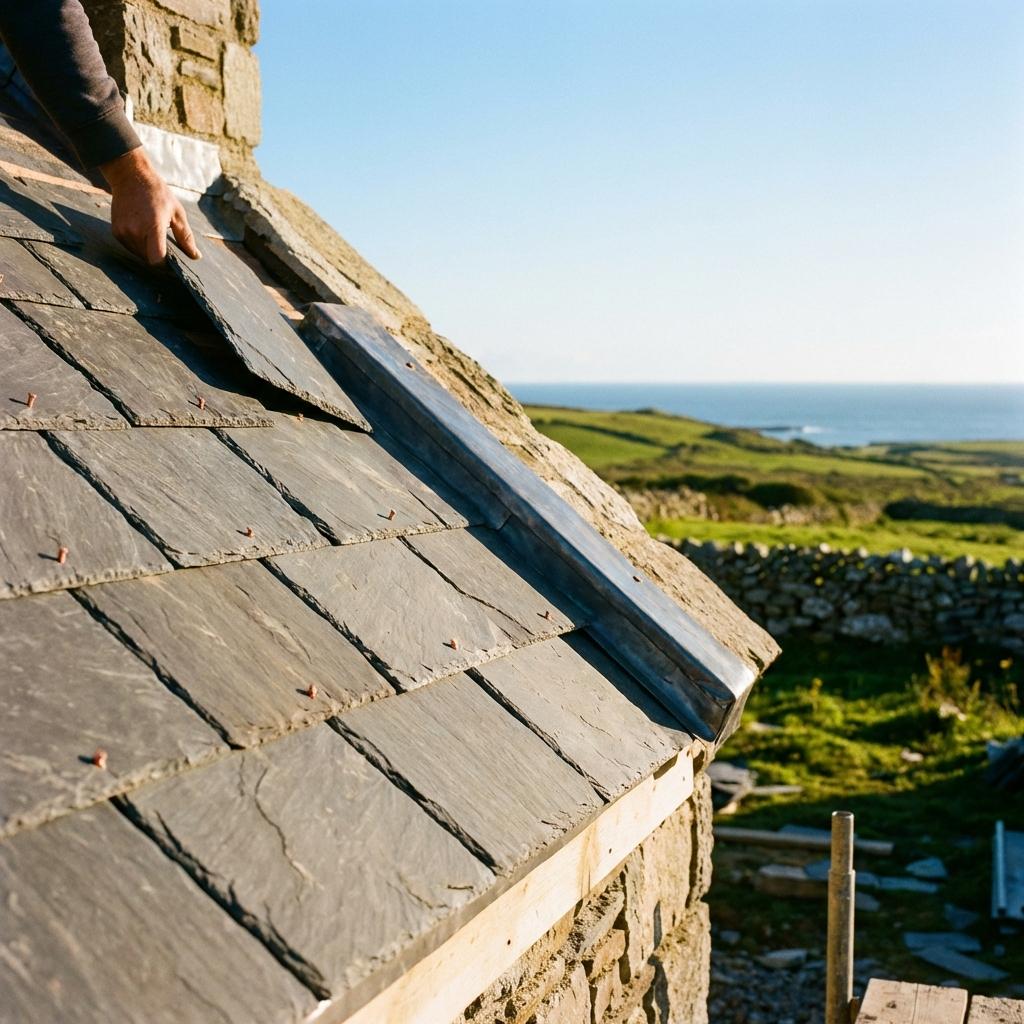
Roof leadwork refers to the sections of a roof that use lead sheet to seal joints and prevent water ingress. The main types of leadwork on a typical Galway home include chimney flashing, which seals the gap between the chimney stack and the roof covering, valley lining, which forms the waterproof channel where two roof slopes meet, soakers, which are small pieces of lead that wrap around the bottom of each tile where it meets a wall or chimney, and step flashing, which is used where a sloping roof abuts a vertical wall. Lead has been the material of choice for these critical junctions for centuries because it is extremely durable, flexible enough to be shaped by hand on site, and resistant to corrosion even in Ireland's wet climate. A well-installed lead detail can last 60 to 100 years, but the mortar fillets that secure lead to brickwork typically fail after 15 to 25 years, which is when most leadwork problems begin.
Common Leadwork Problems in Galway Homes
Galway's Atlantic weather is particularly hard on roof leadwork. The constant cycling between wet and dry, warm and cold, causes thermal expansion and contraction that eventually breaks the mortar seals securing lead flashings. Salt carried in coastal winds accelerates surface corrosion on lead exposed on south and west-facing roof slopes. The most common leadwork issues our Galway roofers see include mortar failure at the top edge of chimney flashings, which allows water to run down behind the lead and into the attic, cracked or lifted lead where old soakers have been disturbed by previous roof work, and debris build-up in valley channels that blocks water flow and causes overspill at the junction. A chimney lead that looks sound from ground level may already be letting in significant amounts of water. This is why professional roof inspections always include a detailed check of every lead detail on the roof. A professional roof inspection in Galway can identify failing leadwork before it causes internal damage.
Need this fixed now?
Free quotes. Fast callouts across Galway City and County.
Valley Repairs: What Galway Homeowners Need to Know
A roof valley is the internal angle where two roof slopes meet, and it is one of the highest-risk areas on any pitched roof. Rainwater from a large roof area funnels into a narrow channel, so even a small failure in the valley lining can let in a surprising volume of water. In Galway, where heavy rainfall is frequent, a valley leak can cause ceiling staining, soaked insulation, and rotting roof timbers within weeks. Valley repair costs in Ireland typically range from EUR350 to EUR500 for resealing and re-bedding an existing valley liner, while a full replacement of the valley flashing with new lead can cost EUR600 to EUR1,200 depending on the length and accessibility of the valley. The signs that your roof valley needs attention include water stains on ceilings below the valley line, debris or moss growing in the valley channel, and daylight visible at the valley edges from inside the attic. If you notice any of these, do not wait for the next dry spell to investigate. Our leaking roof repair services in Galway can trace valley leaks accurately and carry out the repair before internal damage worsens.
Lead Repair vs Replacement: How to Decide
Not every leadwork problem requires a full replacement. A good roofer will assess the condition of the existing lead and recommend the most cost-effective solution. If the lead sheet itself is still in good condition but the mortar fillet has cracked or separated, a simple re-pointing repair costing EUR100 to EUR250 per detail will usually solve the problem. This involves raking out the old mortar and applying a fresh cement fillet properly bonded to both the lead and the chimney brickwork or wall. If the lead has cracked, split, or thinned significantly from corrosion, replacement with new Code 4 or Code 5 lead sheet is necessary. Replacing a chimney back gutter costs EUR250 to EUR500. Replacing valley lining lead on a typical semi-detached house costs EUR600 to EUR1,200. Complete re-leading of a chimney stack, including all flashings and soakers, costs EUR400 to EUR800. These prices are typical for Galway in 2026. Always get a fixed-price quote before work starts so there are no surprises. Our roof repair team in Galway provides detailed written quotes for all leadwork and valley repairs.
Need this fixed now?
Free quotes. Fast callouts across Galway City and County.
Modern Alternatives to Traditional Leadwork
Lead is the traditional material for roof details, but rising material costs and health and safety regulations around lead handling have made alternatives more common in recent years. GRP (glass-reinforced plastic) valley gutters are a popular modern alternative that is lightweight, seamless, and highly durable. They can be fabricated to match any valley shape and are installed in a single piece, eliminating the joints where lead valley liners can fail. Liquid-applied flashing systems using flexible waterproof membranes are another option, particularly for complex roof details where shaped lead would be expensive. These systems are applied cold and cure to form a seamless waterproof membrane. EPDM rubber sheet is also used for valley gutters on some modern roofs and offers excellent flexibility and longevity at a lower cost than lead. Each material has its strengths, and the right choice depends on your roof type, budget, and the specific detail being repaired. A qualified Galway roofer can advise on the best option for your property.
When to Call a Galway Roofer for Leadwork Issues
Leadwork repairs are not a DIY job. Working on roof valleys and chimney flashings requires specialist skills, access equipment, and a thorough understanding of how each detail interacts with the roof covering, the underlay, and the building structure. A poorly executed lead repair can cause more damage than the original problem. You should call a professional roofer if you notice any water staining on ceilings or walls that follows a vertical line from a chimney or roof junction, visible daylight around chimney flashings or at valley edges from inside your attic, loose or lifted lead sections visible from ground level, or if your roof is over 20 years old and has never had a leadwork inspection. At Galway Roofing and Building, we have decades of experience repairing and replacing leadwork on all types of Galway homes, from Victorian terraces in the city centre to modern homes in Knocknacarra, Salthill, and Oranmore.
If you are concerned about the condition of your roof leadwork or valleys, do not wait for a leak to force the issue. Call 089 944 0642 today for a free, no-obligation quote on any leadwork repair or replacement. Our team serves the entire county, from Galway city to Clifden, Ballinasloe, Tuam, Loughrea, and everywhere in between.
Need this fixed now?
Free quotes. Fast callouts across Galway City and County.