2026-08-18 ·
Castlegar
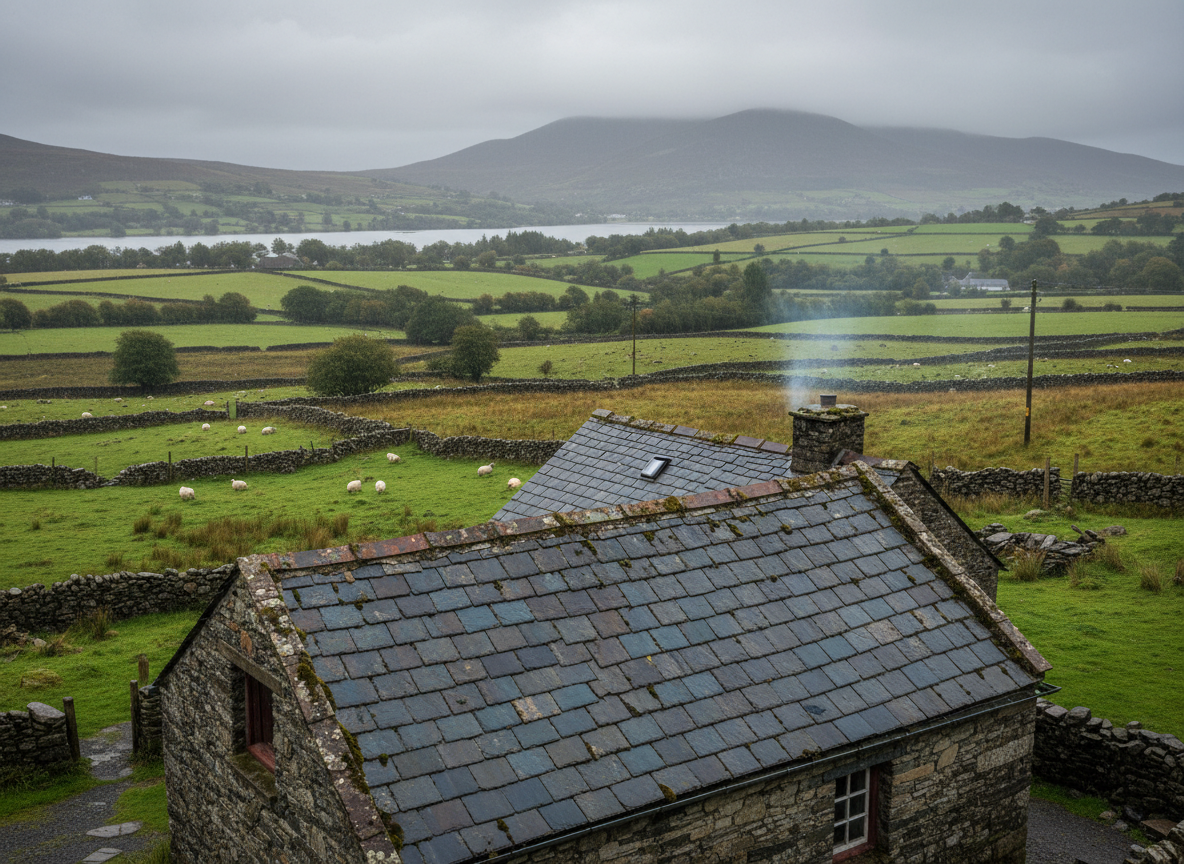
Castlegar sits between Galway city and the airport, where housing mixes 1970s bungalows with newer estates off the Monivea Road corridor. Galway Roofers working this stretch see wind-driven rain penetrate older ridge tiles faster than in sheltered spots like Knocknacarra because the open fields to the east funnel gusts straight at roof planes.
Housing Stock and Roof Types
Castlegar contains both single-storey 1970s homes with concrete tiles and two-storey modern builds finished in natural slate. The older stock often uses 450 mm rafter spacing that leaves less margin when high winds lift edges. Newer estates tend toward 600 mm spacing and mechanical fixings that meet current Irish wind-load tables. Crews based at Monivea Rd, Galway, H91 A7VK keep separate fixings kits for each era so a same-day repair on a 1978 bungalow does not require a second trip for heavier gauge clips.
Atlantic Weather Effects
Salt air from the bay reaches Castlegar on south-westerly flows, corroding lead flashings and nail heads within eight to twelve years on south-facing slopes. High wind shears during winter storms can lift unsecured tiles at the verges first. Homeowners notice small piles of granules in gutters after each gale; that loss of granular coating signals the underlay is next. Regular checks every autumn catch these before water tracks down rafters into attic insulation.
Maintenance Steps That Match Local Conditions
Walk the roof after October storms and look for displaced tiles at the eaves and ridge. Replace any cracked slate with matching Welsh or Spanish stock rather than cheaper imports that erode quicker in salt. Clean gutters before winter so overflow does not sit against fascia boards. For homes with chimneys, inspect the lead soakers where they meet the slate; corrosion here lets water run down the flue and stain ceilings. These checks take under an hour yet prevent most emergency calls.
When Replacement Becomes Necessary
Slate roofs in Castlegar typically reach 35–45 years before the nail fixings fail across multiple courses. Concrete tile roofs last 25–35 years under the same exposure. When more than 15 % of tiles show movement or granule loss, full replacement avoids repeated patch repairs. At that point many owners also upgrade insulation to meet current BER standards and qualify for SEAI grants on the energy side of the job.
Homeowners in Castlegar often compare notes with neighbours in Newcastle who face similar wind exposure but less salt. The same fixing upgrades and material choices appear in both areas. For properties needing slate work, Slate & Tile Roof Replacements crews carry the heavier gauge clips that hold through the next winter season.
Frequently Asked Questions
How often should Castlegar homeowners inspect their roofs? Twice yearly, once after the spring equinox gales and again before the October storms, catches most wind damage before leaks appear. Do modern estates in Castlegar need different fixings than 1970s bungalows? Yes. Newer builds use ring-shank nails or clips rated for higher wind zones, while older roofs often rely on head-nailed tiles that loosen faster under salt corrosion. Can chimney repairs stop water tracking into attics? Renewing the lead soakers and pointing the stack usually halts the run of water down the flue; see typical work on Chimney Repairs & Lead Flashing. What grant support exists for roof upgrades? SEAI offers insulation grants that can be combined with roof replacement when the work improves the BER rating; check current rates on the SEAI site before scheduling.