2026-08-18 ·
Ballybane
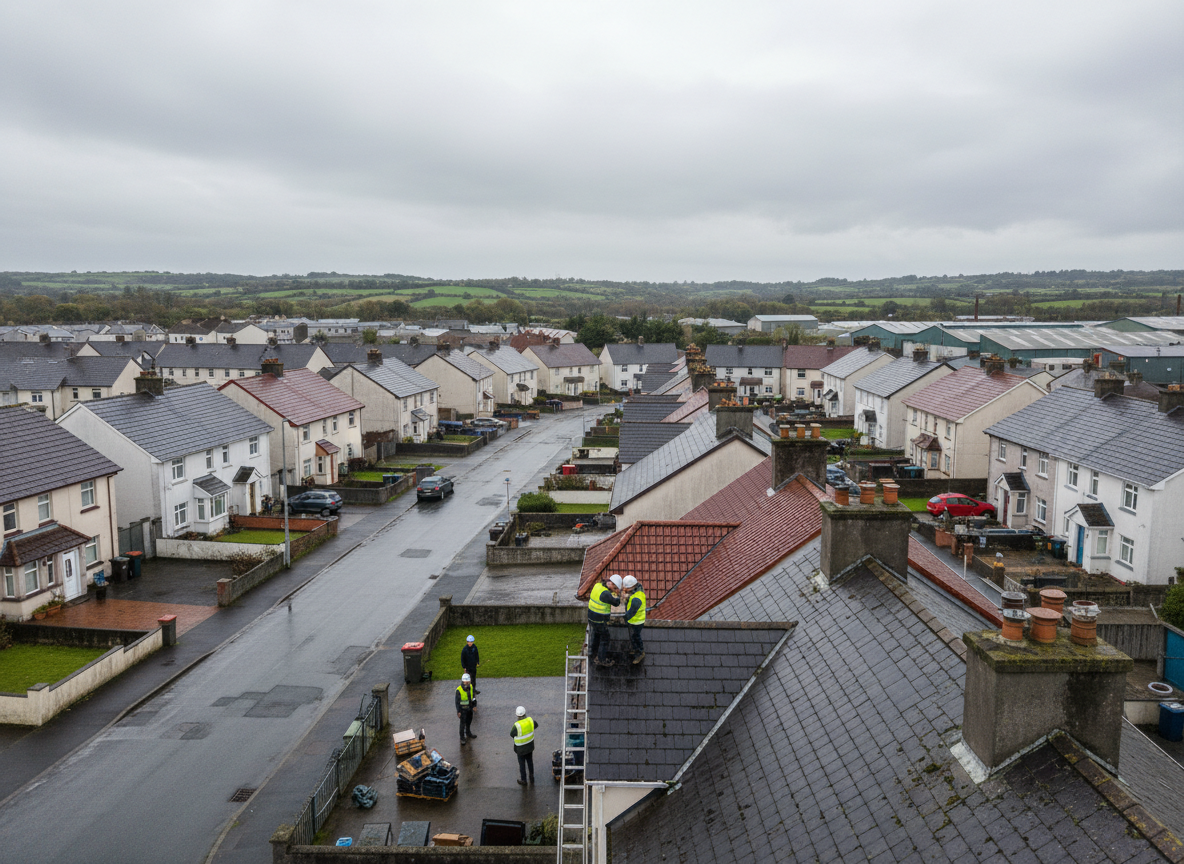
Ballybane roofs typically last 25-35 years before full replacement becomes the practical option when wind-driven rain and salt air have worked on slate and tile for decades.
Housing stock differences in Ballybane
Most streets here hold 1970s semi-detached houses with concrete tiles laid on battens and felt, while newer estates near the Monivea Road roundabout use interlocking concrete or natural slate. The older stock often shows slipped tiles after winter gales because the original felt has perished, allowing water to reach timber. Newer builds sometimes have better underlay but still suffer ridge tile movement when high wind shears hit the exposed east side of the city. Owners on the Monivea Rd side notice faster lead flashing deterioration around chimneys because salt deposits build up quicker than in inland parts of the county.
Wind and salt effects on local roofs
Galway’s Atlantic pattern brings frequent gusts above 50 km/h that lift edges on older felt systems and drive rain under tiles on south-west pitches. Salt carried inland corrodes metal valley linings and nail heads within eight to twelve years on many Ballybane properties. This shortens the service life of standard galvanised components compared with inland towns. Regular checks after storms prevent small lifts turning into leaks that travel down party walls in the semi-detached stock common here.
Practical maintenance steps for Ballybane homeowners
- Walk the roof after every major storm to spot displaced tiles or cracked ridge mortar.
- Clear gutters twice yearly so wind-driven debris does not dam water against the eaves.
- Replace perished lead flashings with code-5 lead or modern alternatives before the next winter.
- Check for corrosion on any exposed metal fixings, especially on south and west elevations.
These steps keep minor issues from requiring emergency roof repairs & leak detection during the wettest months.
When replacement makes sense
Full slate & tile roof replacements become the economical choice once more than 20 percent of the covering shows damage or the underlay has failed across multiple slopes. In Ballybane the job usually involves stripping to the rafters, fitting new breathable membrane, and upgrading insulation to meet current BER standards. Homeowners can combine the work with SEAI grants for attic insulation where the existing depth is below 300 mm. The process takes five to eight working days on a typical three-bedroom semi and leaves the property weathertight before the next Atlantic front arrives.
Nearby context and further reading
Conditions in Ballybane mirror those a short distance away in Knocknacarra where similar wind exposure affects newer estates. Readers comparing notes across the city often look at experiences shared in the Castlegar post for additional local detail.
Frequently Asked Questions
How often should Ballybane roofs be inspected? Twice yearly plus after any storm exceeding 60 km/h prevents small wind damage from becoming interior leaks.
Do 1970s Ballybane houses need different underlay from newer builds? Yes, older properties usually require full strip and new breathable membrane because the original felt has reached the end of its life.
Can chimney repairs be done without full roof replacement? Isolated chimney repairs & lead flashing work is common when only the stack area shows failure and the rest of the covering remains sound.
What grant support exists for insulation upgrades during re-roofing? SEAI schemes remain available for qualifying attic insulation upgrades when the roof is open, provided the work meets current BER requirements.